
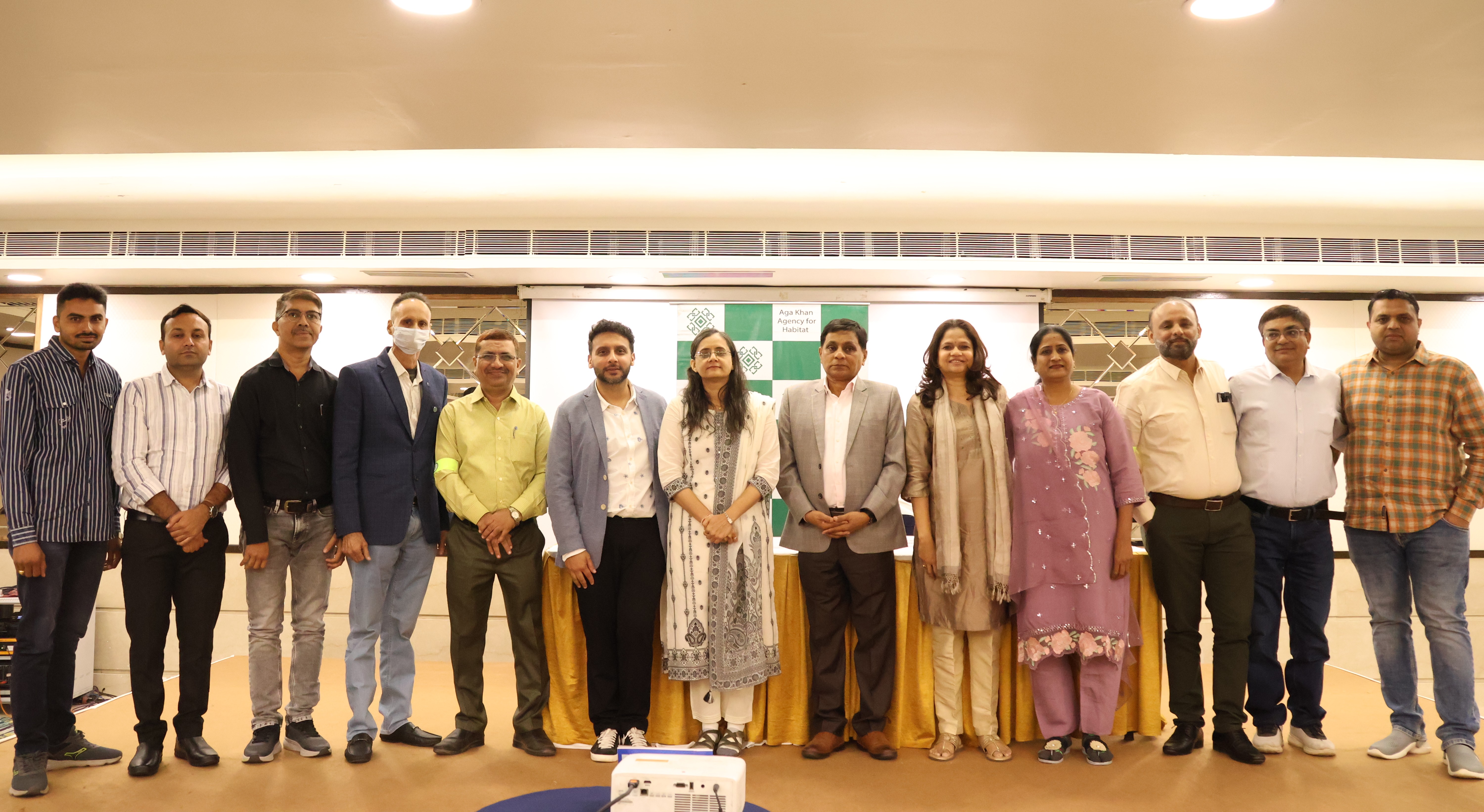
Rajkot : Rajkot witnessed a focused push towards sustainable and climate-resilient housing as the Aga Khan Agency for Habitat (AKAH) India organised a Housing Mela, engaging cooperative housing societies with practical solutions for safer and greener urban living. The event brought together representatives from 64 housing societies and 159 residents, along with industry experts working in energy efficiency, water management and building safety.
Designed as an interactive knowledge platform, the housing mela addressed everyday challenges faced by cooperative societies, including ageing infrastructure, rising maintenance costs and climate-related risks. Residents and managing committee members were introduced to solutions ranging from timely structural repairs to the adoption of eco-friendly practices such as rainwater management, passive cooling techniques, solar energy and improved waste-handling systems.
A key highlight of the Mela was its multi-stakeholder format, which enabled direct interaction between residents, technical experts and solution providers. Demonstration stalls and exhibits showcased water-saving technologies, heat-resistant building materials, energy-efficient systems, fire safety equipment and waste-management solutions, allowing participants to explore options that can be implemented at the society level.
Speaking on the occasion, Ms Prerana Langa, CEO of Aga Khan Agency for Habitat (AKAH), India, underscored the role of housing societies in addressing climate change. She pointed out that residential buildings contribute around four per cent of India’s total carbon emissions, and stressed that timely maintenance combined with green upgrades can significantly reduce long-term costs and environmental impact. According to AKAH’s estimates, mid-sized housing societies can achieve substantial reductions in repair expenses, energy consumption and indoor heat levels through sustainable interventions.
The Housing Mela concluded with a strong emphasis on community-led action, reinforcing the need for informed decision-making and collaboration to create safer, more resilient and environmentally responsible urban neighborhoods.