
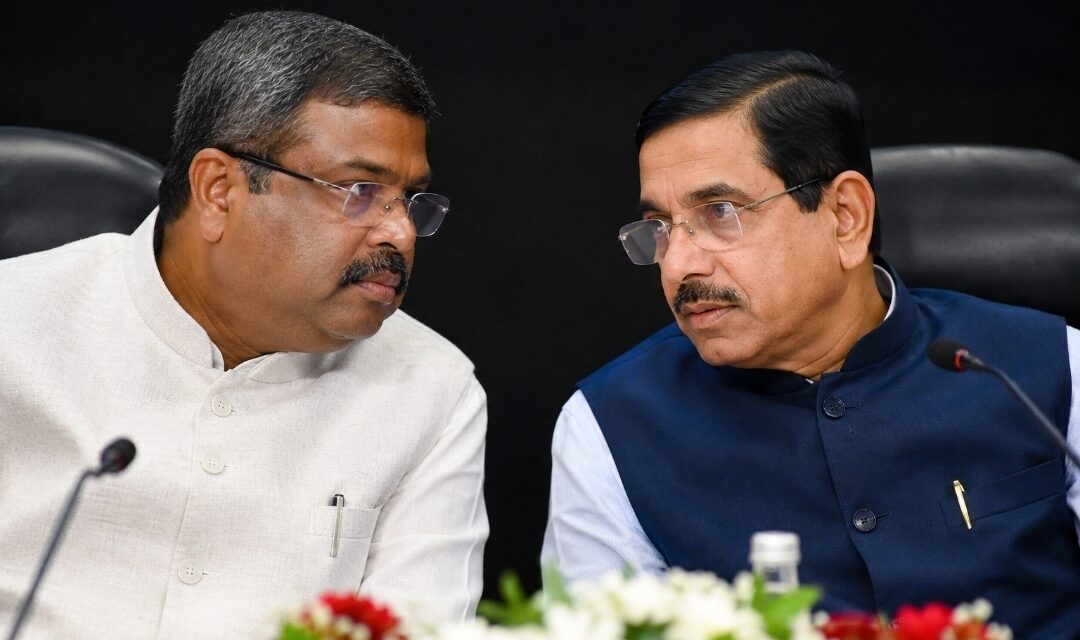
New Delhi: A major change has taken place in the Union Cabinet after Dharmendra Pradhan resigned as Union Education Minister. The development comes after weeks of public protests and growing pressure over issues related to the country’s examination system. The Centre has now given Pralhad Joshi the responsibility of leading the Ministry of Education.
The resignation has sparked political debate across the country. Many believe the move reflects the government’s attempt to address public concerns and restore confidence in India’s education system.
What led to the resignation?
The demand for accountability gained momentum after students and youth organisations raised concerns about examination management and transparency. Several groups called for stronger reforms to improve the credibility of competitive examinations.
As the protests expanded, pressure increased on the Union government to take corrective action. Dharmendra Pradhan eventually stepped down, paving the way for new leadership in the ministry.
Jantar Mantar Became the Centre of Protest
One of the biggest demonstrations took place at Jantar Mantar in New Delhi, where members of the CJP and several student groups gathered to demand reforms in the education system.
Protesters asked for greater transparency in examinations, stricter action against irregularities and accountability from those responsible for conducting national-level exams. The protest continued for several days and attracted attention from political leaders, education experts and civil society organisations.
The demonstration remained peaceful, with organisers repeatedly stating that their goal was to strengthen the education system rather than create political confrontation.
Following the leadership change, Pralhad Joshi has taken charge of the Ministry of Education. His immediate focus will likely remain on restoring trust among students and parents.
Education experts expect the ministry to review examination procedures, strengthen digital security and improve coordination among examination agencies. Many stakeholders have also called for faster grievance redressal and greater transparency in recruitment and entrance examinations.
What This Means for Students
The leadership change has created expectations of policy reforms. Students across the country now look towards the government for timely action on examination security and fair evaluation systems.
Experts believe that rebuilding public confidence will require long-term reforms, better technology and stronger institutional accountability.
While the change in leadership marks an important political development, the real challenge now lies in delivering meaningful improvements that benefit students across India.